
By Dame Sannae Hopson | Founder and Herbal Skincare Formulator, Dame Body
Dame, there is a point in fall when your favorite shower starts feeling especially good, but your shins have a few complaints afterward. The weather shifts, the heat comes on, and the moisture routine you loved in summer may need a small adjustment.
For some women, body oil still does everything they want. For others, body butter brings the richer finish they have been missing. Both can belong in a thoughtful routine, and neither needs to become another obligation.
Let’s look at what these textures offer, how to use them, and how to recognize when your skin is asking for something different. The goal is comfortable, soft, supple skin and a ritual that makes sense for you.
Why your usual routine may feel different in fall
Cold, dry outdoor air and indoor heating can leave skin feeling drier. Your environment matters, so a woman in a mild, humid climate may want a different texture from someone spending her day in heated rooms. Seasonal changes can justify an adjustment, but they do not tell every woman to choose the same product. [1]
Start by noticing what happens after application. Is your skin comfortable later in the day? Do certain areas feel tight again? Do you enjoy the finish beneath your clothes? Those observations give you something useful to work with.
Understand hydration and the ingredients that help keep it
Hydration refers to water in the skin. Moisturizers can help by supplying water, helping skin hold it, or reducing its escape. Oils and butters contribute mainly through their fatty components. A formula without water does not add water simply because it feels rich.
Three ingredient roles help explain the difference. Humectants, such as glycerin, help attract and retain water. Emollients soften and smooth the outer skin surface. Occlusive ingredients form a surface layer that slows water loss. One formula can bring these roles together, and an ingredient can do more than one job. [3]
That is why I like to pair texture advice with application advice. A lovely butter spread over slightly damp skin has moisture to help retain. More richness alone cannot tell you everything about hydration.
When body oil is enough
If your usual oil leaves your skin comfortable and you enjoy its finish, keep enjoying it. Fall does not come with a rule requiring an extra jar on the bathroom shelf.
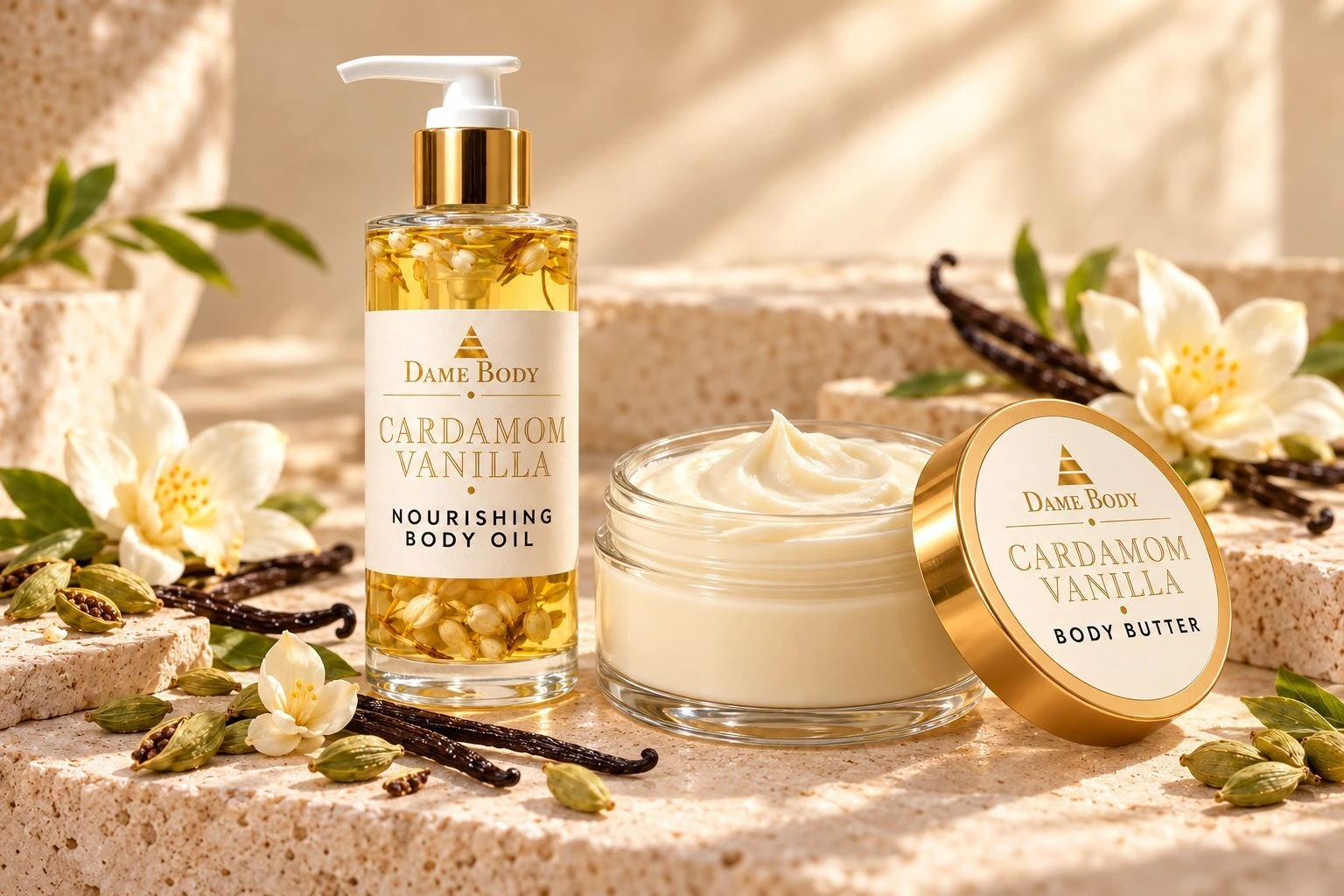
Oil offers an easy-spreading texture that can suit an all-over ritual. Some blends feel lighter; others feel quite substantial. Cardamom Vanilla Nourishing Body Oil, for example, includes sunflower, avocado, argan, macadamia, pumpkin, rosehip, and other oils in its declared formula. Its current use guidance recommends a small amount on slightly damp skin. [5]
When a richer body butter feels right
Body butter may appeal when you prefer a creamier, more substantial texture or want to focus richer care on drier areas. You might reach for it on your legs after an evening shower while continuing to enjoy oil elsewhere.
In Cardamom + Vanilla Body Butter, mango, cocoa, shea, and kokum butters sit alongside oils including jojoba, sunflower, avocado, and argan. Those butters give the blend its body, while the combined fats contribute to its conditioning feel. The current formula lists no water. [4]
Butter and oil are not separate worlds. A butter formula can contain plenty of liquid oils. What changes is their balance with the more solid fats and the resulting texture. The name on the jar alone does not measure how well a product reduces water loss. [3, 4]
A richer surface finish can help limit moisture loss, depending on the complete formula. That does not mean the product must disappear deep into the skin to be useful, or that a thick texture guarantees better results for everyone. [3]
My perspective as a formulator
When I talk about richness, I want you to think about the experience on your own skin. How does the product spread? Do you like the feel once it settles? Is the amount comfortable under your clothes? And does your skin still feel cared for later?
I want the moisture step in the Dame Glowing Skin Method to give you choices. Some women love an oil on its own. Some reach straight for butter. Some enjoy a little of each. You can choose what serves you without turning body care into a shopping assignment.
Choose the texture for the moment
| What you notice | A choice to try | What to check afterward |
|---|---|---|
| Your current oil keeps skin comfortable | Continue with oil alone | Whether comfort lasts and you enjoy the finish |
| You prefer a richer feel on legs or elbows | Try butter on those areas | Whether a small amount gives the feel you want |
| You enjoy oil but want extra richness in places | Use a little oil, then butter selectively | Whether both add value to your routine |
| Skin stays dry, painful, itchy, or irritated | Seek advice rather than adding more layers | Whether a skin condition needs specific care [1, 2] |
Build a moisture ritual you can actually repeat
1. Begin with a comfortable shower. Choose warm water and keep the shower brief. Five to ten minutes is the American Academy of Dermatology’s guidance for dry skin. [2]
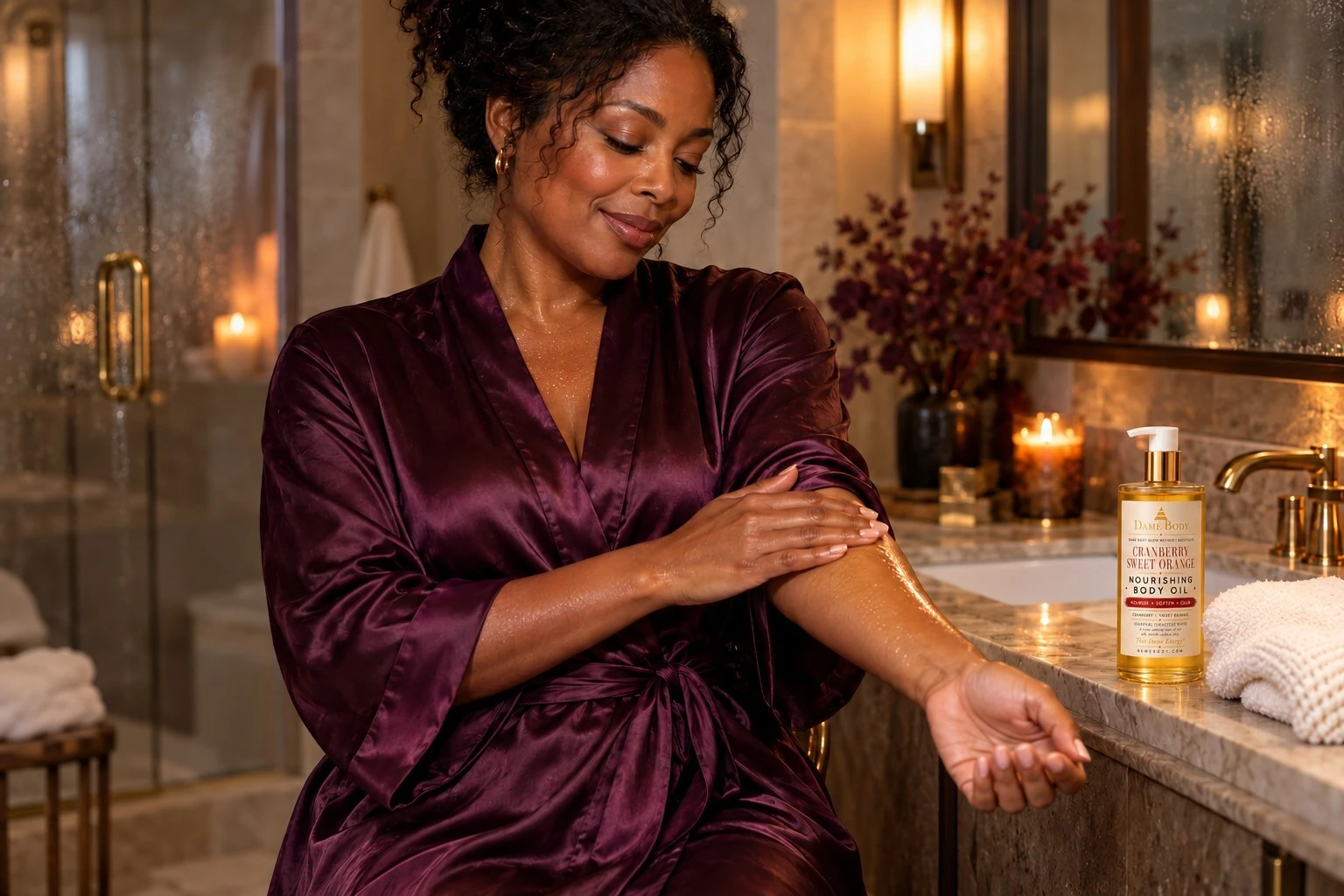
2. Leave a little dampness behind. Pat gently with your towel. Apply your moisturizer promptly while skin is still slightly damp, rather than waiting until it is completely dry. [1, 2]
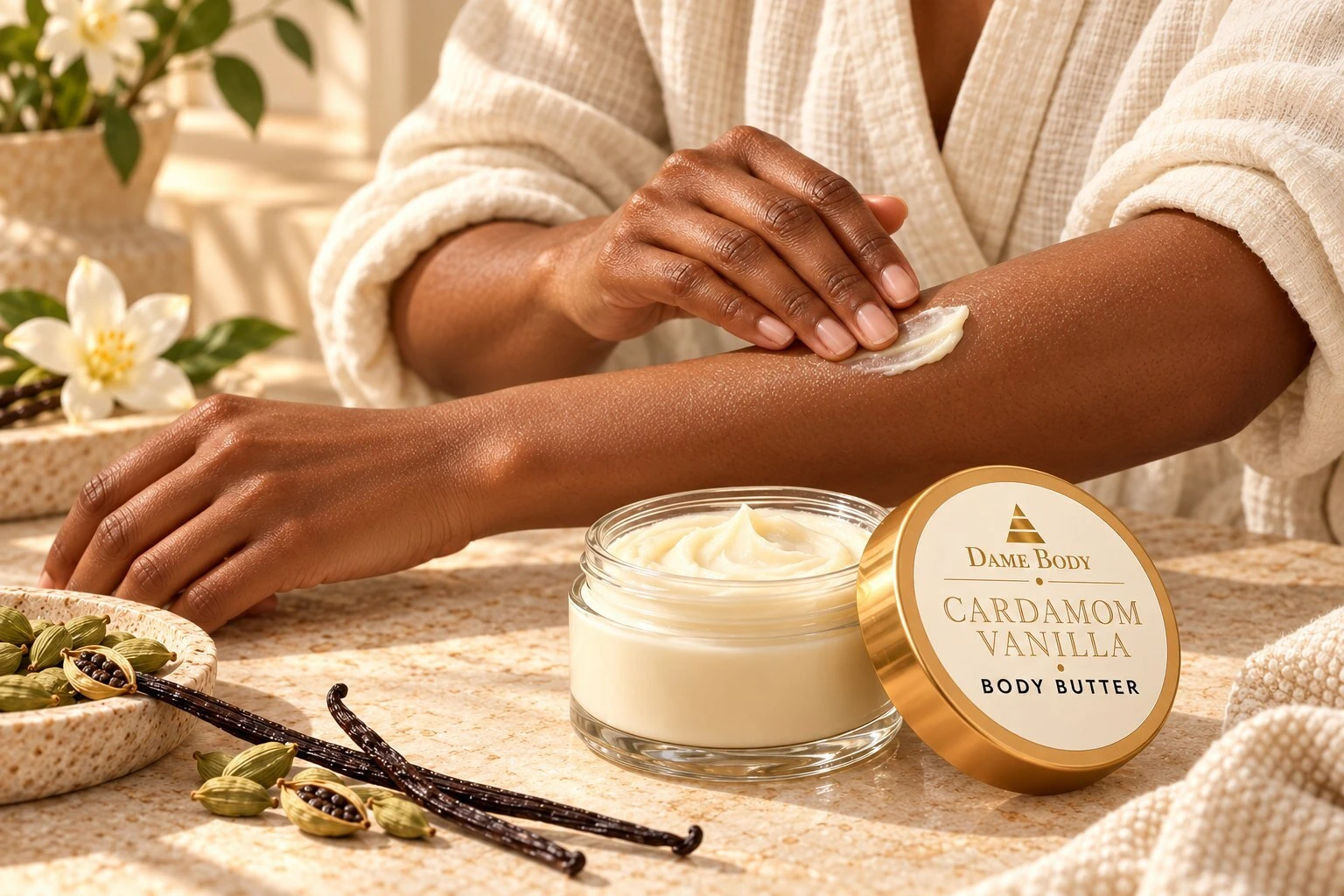
3. Choose oil, butter, or both. Start with a small amount and work in sections. If you enjoy both Dame Body textures, apply oil first, then butter where you want more richness. This is a suggested routine, not a requirement for every skin type. [4, 5]
4. Match the amount to the area. Your elbows may want a little more than your shoulders. Give the product a moment to settle before dressing. If the finish feels heavier than you enjoy, try less next time.
5. Care for what is in the container. Use clean, dry hands or a clean scoop for butter. Close the jar or bottle, keep water out, and store away from heat and direct sunlight. Damp skin does not mean wet fingers in the jar. [4, 5]
Take care around tubs and bathroom floors, since oil can make surfaces slippery. And keep these products for body use as directed on their labels. [4, 5]
Small fall habits that make the routine more useful
Let each area have its own amount
Try oil on the areas where you love its feel and butter on the areas where you prefer a richer finish. You can also change textures between morning and evening. There is no need to make your entire body follow one preference.
Give flaky skin a gentle day
Resist treating every dry patch as something that needs polishing away. If skin is peeling, irritated, or uncomfortable, pause exfoliation and focus on gentle care. The Exfoliate step is occasional, not a daily admission ticket to Moisturize. [1]
Choose fragrance according to tolerance
A warm aroma can make a routine enjoyable. Irritated or sensitive skin, however, is a reason to choose fragrance-free care. Botanical ingredients and essential oils can also cause reactions. Review the full ingredient list, especially when you have known allergies. [1, 2, 4, 5]
Look beyond the jar
A clean humidifier can help when indoor air is dry. Soft clothing may feel better against sensitive skin than rough fabric. Hands need attention after washing, too. Everyday habits can support the care you apply after your shower. [2]
Use what earns its place
Before buying more, consider whether timing, amount, or targeted application makes your current product more useful. If you do choose something new, pick a size you can use consistently and store it as directed. Responsible consumption can be part of a beautiful body care ritual.
Questions I want you to feel comfortable asking
Do I need to use both every day
No. Oil, butter, or both can be your moisture choice. Reassess how your skin feels instead of treating layering as a rule. More products are helpful only when they improve your experience.
What if oil and butter still leave me uncomfortable
A fragrance-free cream containing water and humectants may be a better fit than adding more fats. Persistent dryness, cracks, pain, or a rash deserves a dermatologist’s attention. Body care cannot replace treatment for an underlying condition. [1, 2]
Can I mix water into my butter to make it hydrating
Keep water out of the jar. Apply to slightly damp skin instead, following the product directions. Adding water changes the formula and can compromise its keeping quality. [4]
Let comfort guide your next choice
The best fall routine is one you understand and want to return to. Notice the weather, notice your skin, and choose the texture that fits. An oil can be enough. A butter can bring the richness you enjoy. Together, they can be a lovely option when both have a purpose.
Within the Dame Glowing Skin Method, Cleanse, Exfoliate, Moisturize remains a flexible guide. Cleanse gently, exfoliate thoughtfully when appropriate, and make room for moisture that suits your day.
If you are ready to explore a different texture, browse Dame Body’s oils and butters, read the individual ingredient lists, and choose the moisture ritual that feels like yours.
Dame Sannae Hopson is the founder of Dame Body, a Certified Herbal Skincare Formulator and Certified Holistic Health and Wellness Coach. She shares practical botanical body care education and everyday self-care rituals.
Sources and further reading
[1] American Academy of Dermatology | How to pick the right moisturizer for your skin
[2] American Academy of Dermatology | Dermatologists’ top tips for relieving dry skin
[3] DermNet | Emollients and moisturisers
[4] Dame Body | Cardamom + Vanilla Body Butter ingredients and use guidance
[5] Dame Body | Cardamom Vanilla Nourishing Body Oil ingredients and use guidance